
FOR MISSION-DRIVEN ORGANIZATIONSVision and Passion
are Rarely the Problem.
The challenge is knowing what your vision actually requires
and building the evidence, tools, and frameworks that make it impactful.


DO ANY OF THESE SOUND FAMILIAR?Leaders I work with
often pose questions like these
-
We have a vision for what we want to build, but we don't know what it actually needs to become
-
We have data, but we don't know if it's answering the questions that actually drive our decisions
-
We need to know whether our program is working
and be able to prove it
-
We want to understand the needs of the communities/clients we are trying to serve better
-
We're ready to use AI but aren't sure where it will actually deliver value — or where it might create more problems than it solves
-
We know what we want to change — we just can't yet see the path from here to there
-
We need to demonstrate impact clearly to secure or sustain funding
WHAT I DOHelping mission-driven organizations
turn complexity into clear, effective action.
Most ideas don't fail because of lack of vision. They fail because they are built without the right combination of disciplines, methods, and systems to support them. I work with organizations to design that structure — so what gets built is not just credible, but usable, effective, and scalable in practice.
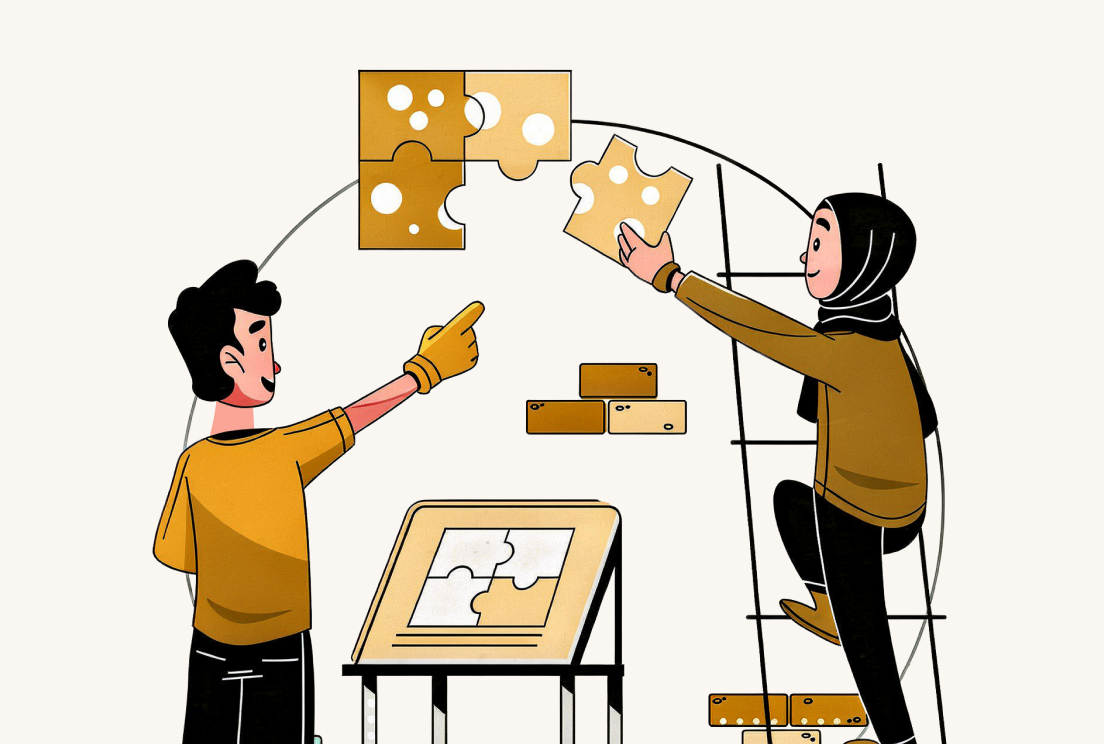
When you have a vision but don't know what it needs to become
You have an idea — sometimes a powerful one — but it isn't yet clear what form it should take, how to make it credible, or how to make it usable. I help you figure that out.
I've taken early-stage concepts and built them into nationally significant research studies and AI-supported policy tools that leadership couldn't have specified in advance. In both cases, the final product was dramatically more impactful than the initial ask — because it was grounded in what was actually there: the organizational realities, the knowledge communities already held, and the strengths already present in the space.
This is the work I find most meaningful. It sits at the intersection of rigorous evidence, organizational values, and the conditions that shape what's possible — and it requires someone who can hold all three at once.
Most clients come to me through one of these three entry points — though the work rarely stays neatly inside just one:
-

Research & Evaluation
Build the evidence your organization needs to learn, decide, and demonstrate impact.
Conduct needs assessments to ensure you're solving the problem that truly matters to the communities you serve
Design scientifically valid studies — from RCTs and quasi-experimental designs to mixed methods and participatory approaches
Build and lead the teams, partnerships, and project infrastructure needed to implement research well
Analyze quantitative and qualitative data to surface what's actually happening — not just what was expected
-
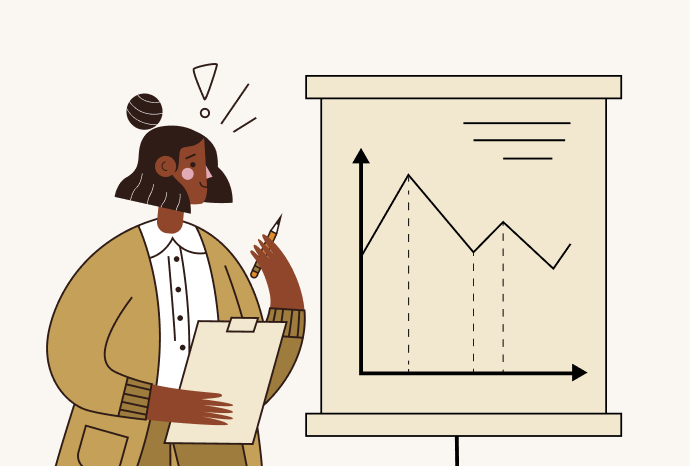
Frameworks & Communication
Make your impact visible, credible, and actionable.
Develop theories of change and logic models that make impact legible — to your team and to the outside world
Build measurement frameworks tied to your strategy — so you're tracking what actually matters
Design evidence products tailored to different audiences — funders, policymakers, boards, and communities — grounded in rigorous data and analysis
Communicate results clearly and compellingly to the people who need to understand and act on them
-
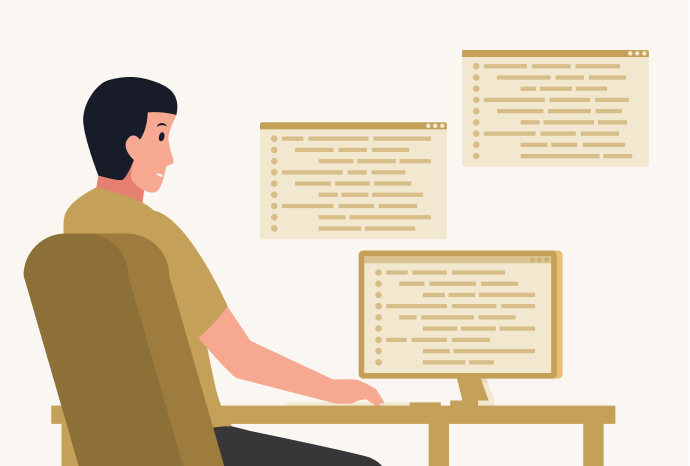
Decision Support & AI
Build the systems and tools your team needs to work better..
Design data systems and workflows that make evidence accessible for day-to-day decisions
Build AI-supported tools and experimentation frameworks that improve how your team works — and help you learn what's actually driving results
Develop operational infrastructure — dashboards, decision frameworks, process tools — that your organization can actually sustain
Design use cases where AI genuinely strengthens your work without replacing human judgment
HOW I WORK
A collaborative
partner
I engage across your team, leadership, board, communities, funders, and partners to understand what is actually driving decisions, constraints, and priorities — before I recommend anything.
-
In practice, this means:
Reframing problems so they reflect how change actually happens — before investing in solutions
Identifying the disciplines, expertise, and partners the work truly requires — and bringing them together
Combining analytical rigor with real-world constraints
Delivering something your team can actually use, sustain, and build on
-
I build on what you already have.
Most organizations have more assets than they recognize — knowledge held by their communities, talent within their teams, data they've already collected. I start by finding and building on those strengths rather than arriving with solutions that ignore them.
-
Before and as I build, I test.
I design experiments to pressure-test assumptions, surface constraints, and learn before committing to a solution. That means rigorous technical evaluation — defined performance criteria, systematic error analysis, and examining where assumptions break down — alongside iterative testing with the team, users, and stakeholders to ensure what we're building reflects both what works technically and what people actually need, will use, and find meaningful.
-
I see what's hard to see from the inside.
I come in without organizational politics, prior positioning, or a stake in a particular outcome—while still grounding the work in your context. That allows me to surface what’s actually driving misalignment, bring structure to complex decisions, and move teams forward. Compared to building this capacity internally, you get senior-level expertise for a defined engagement without the long-term cost or overhead.
Ready to turn
your vision into real,
measurable impact?
I offer a completely free initial conversation — no time limit and no obligation.
Whether your project is just an idea or you already have a clear goal, I’d love to hear from you. We’ll explore your needs and see if we’re the right fit to work together.
I usually reply within 1–2 business days.

SELECTED WORKDesigning systems,
not just delivering outputs.
Four examples across three decades and disciplines — each one showing what happens when rigorous method meets real organizational context
-
ENGINEERING PRODUCT DESIGN
Industrial Burner Design System
Transformed a manual, experience-driven design process into a parameter-driven system with embedded engineering logic — automating design decisions and introducing statistical methods that revealed more efficient, higher-performing configurations that intuition alone had missed. An early demonstration of what systematic design makes possible.
-
CROSS-DISCIPLINARY PRODUCT DESIGN
AI-Supported Policy Decision Tool
Led a cross-disciplinary team spanning AI, trafficking expertise, and social science to transform a conceptual policy idea into a working decision-support system that uses trusted datasets, linking specific interventions to population-level outcomes. Leadership came with a sketch of what they wanted to accomplish — the final tool was something they couldn't have specified in advance.
-
PARTICIPATORY ACTION RESEARCH
National Survivor Study
Reimagined traditional survey into a participatory research study co-designed with survivors as equal partners. What began as a request to measure prevention metrics became, after listening to the community, a study focused on why survivors struggle to thrive after leaving trafficking situations — producing the largest dataset of its kind in the United States. The findings directly informed an unconditional cash transfer pilot program for survivors and contributed to federal legislative efforts on criminal record relief — evidence that didn't just sit in a report, but changed policy and people's lives.
-
MULTI-COUNTRY RESEARCH DESIGN
One Health Framework for Disease Spillover
Developed a peer-reviewed conceptual framework to examine the human-animal interface as a mechanism for zoonotic disease spillover. The framework was designed to be applicable anywhere — tested and adapted across Thailand, Laos, Uganda, and Malaysia, each presenting distinct ecologies, cultural practices, and risk profiles. The result was a study design as applicable in a Southeast Asian rural community as in an East African pastoral setting, and anywhere the human-animal interface shapes disease risk.
TESTIMONIAL
In Their
words
A few perspectives from people I've worked with closely
-
"Sara’s ability to navigate complexity with integrity and clarity made the difference between a technical solution and a mission-aligned innovation."
— Zachary Schwitzky
Limbik
-
"Sara brings a rare blend of technical fluency and a deep commitment to ethical, mission-driven work. She is a systems thinker who knows how to translate complex data into actionable insights, and she builds trust across teams while doing it."
— Robert Beiser
Technology & Advocacy Leader
-
"Sara excels at developing big picture concepts like an organizational theory of change, strategies, and logic models — but is also thoughtful about the day to day needs of the team. She does an excellent job translating complex data concepts for the rest of the organization, allowing data and research insights to be applied for program use."
— Megan Cutter
Chief of Victim Services, RAINN
ABOUT SARA WOLDEHANNAConnecting technical rigor, social impact,
and the knowledge communities carry.
-
My approach draws from three distinct disciplines: the systematic rigor of engineering, the methodological credibility of the sciences, and the human-centered lens of anthropology — applied across multiple sectors over three decades. That combination is not accidental, and it's what allows me to connect pieces that are usually treated separately and find solutions in unexpected spaces.
What that means in practice: I bring both the methodological range to design the right study or tool, and the organizational experience to know what will actually get used.
Expertise across domains.
I bring expertise across the full arc from evidence generation to action — spanning experimental, quasi-experimental, and mixed-methods research design, advanced statistical and qualitative analysis methods, participatory, community-centered, and complexity-aware approaches, engineering design principles, and the strategic judgment to know when and how data and AI can genuinely strengthen the work.
Education:
Master of Applied Anthropology, University of Maryland
Master of Science, Mechanical Engineering, Lehigh University
Bachelor of Arts, Physics, Randolph-Macon Woman's College
LET’S WORK TOGETHERLet's find out what
your vision actually requires.
We start with a free initial conversation — no time limit, no obligation — so we can both make sure it's the right match before committing to anything.
Whether you have a fully formed question or just the beginning of one, I'd love to hear it. Reach out, and I'll be in touch within 1–2 business days.